
Corporate Sustainability · ESG
The Fastest Greenwashing Check for Carbon Offsets
When an offset project looks convincing on paper, the fastest greenwashing check is simple: ask what happens if the carbon benefit does not last. That question cuts through polished summaries and...
When an offset project looks convincing on paper, the fastest greenwashing check is simple: ask what happens if the carbon benefit does not last. That question cuts through polished summaries and brings attention back to the durability of the climate claim.
For corporate leaders and ESG managers, this is not a technical detail to leave for later. It is one of the clearest ways to assess whether a project is built on substance or on presentation. If the benefit can disappear, the claim needs to explain how that risk is managed.
Start with permanence, not promotion
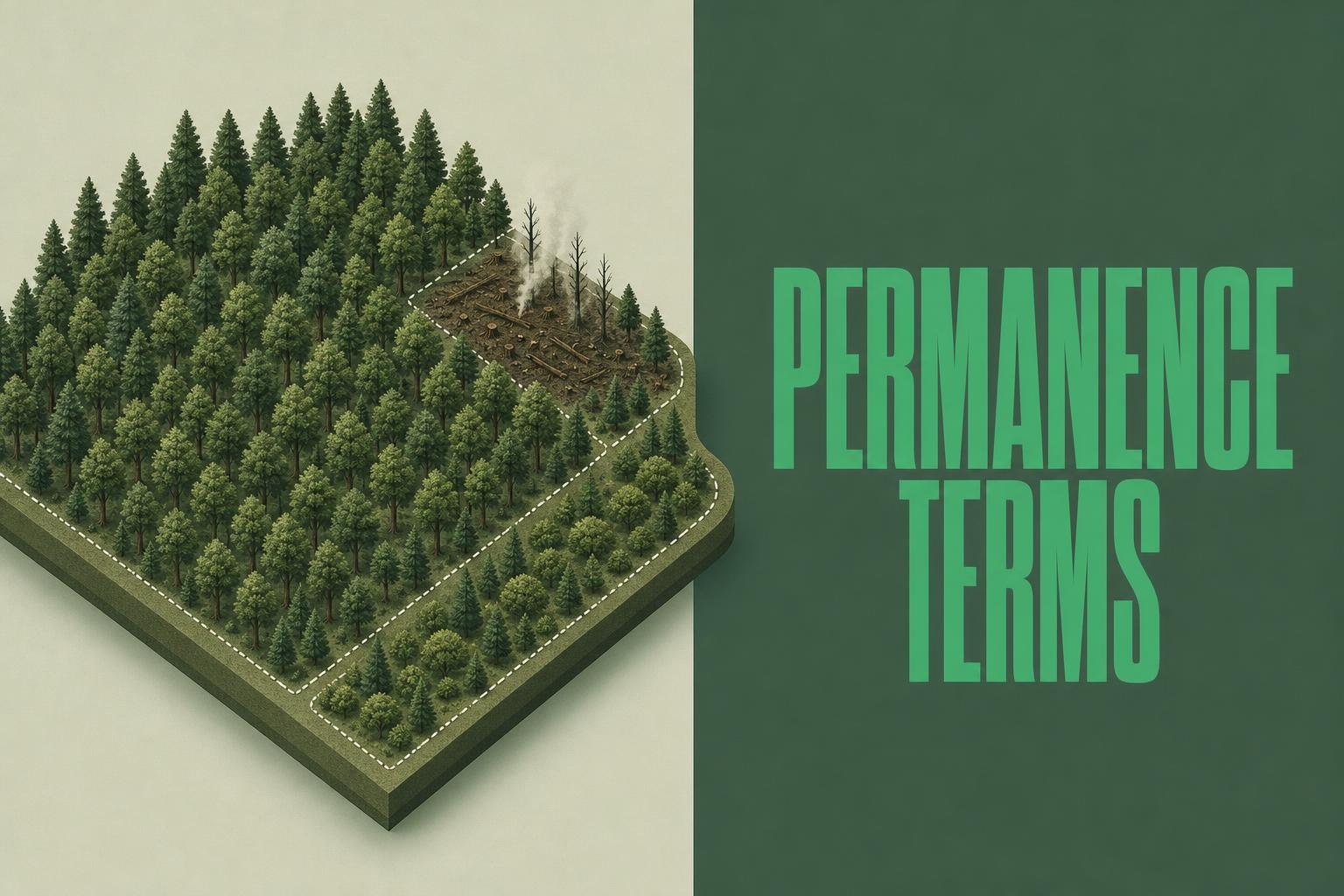
Too often, the marketing summary comes first. It highlights trees planted, credits issued, or emissions supposedly balanced. But a responsible review starts elsewhere. We recommend reading the permanence section before reading the marketing summary.
That is because permanence tells us whether the climate benefit is expected to last. If that section is vague, the project may be asking for trust without showing how it will protect that trust over time. A strong claim does not depend on optimism alone. It explains the downside clearly.
What to look for in forest project documents
For forest projects, there are three document-level signals that matter most: monitoring, buffer pools, and reversal terms. These are the pieces that show whether the project has thought through what happens if stored carbon is later lost.
Monitoring shows whether the project is tracking conditions over time. Buffer pools indicate whether some credits are set aside to help absorb future losses. Reversal terms explain what happens if the carbon benefit does not last. If a project only talks about planting trees and leaves out how losses are handled later, the claim is incomplete.
That omission matters because it shifts attention away from risk. A project can sound strong in a headline and still leave the permanence question unanswered in the documents behind the claim. For buyers and decision-makers, that gap is a warning sign.
The same test works across offset types
This is not only a forest issue. The same test works for any offset type. A strong project does not hide the downside. It explains the risk, the safeguards, and the limits of the credit in plain language.
That clarity is what builds credibility. When a project is transparent about trade-offs, it gives corporate teams a more honest basis for decision-making. When those trade-offs are missing, the climate claim may be doing more work than the project itself.
In other words, the question is not whether the project sounds good. The question is whether the documents show how the benefit is protected, how losses are addressed, and where the limits sit. That is the difference between a claim that feels complete and one that is actually complete.
A practical habit for corporate climate decisions
For organizations evaluating offsets, this is a useful habit to build into every review: read the permanence section first, then compare it with the marketing language. If the project is serious, the documents should match the message. If they do not, the gap deserves attention.
At EasyOffset, we believe corporate climate action should be grounded in clear evidence and honest communication. That means looking beyond the surface and asking the questions that protect both climate integrity and stakeholder trust. For teams that want a more disciplined way to assess offset claims, our website offers a starting point for better evaluation. We also share practical guidance on carbon offset due diligence for organizations making climate decisions.
Greenwashing is often easiest to spot when a project avoids the hard question: what happens if the benefit does not last? If that answer is missing, the claim is not ready for confidence.