
Corporate Sustainability · ESG
How to Choose the Right Offset for the Claim
For corporate leaders and ESG managers, choosing an offset project is not just a procurement decision. It is a decision about what claim the organization needs to support, what risk it is trying...
For corporate leaders and ESG managers, choosing an offset project is not just a procurement decision. It is a decision about what claim the organization needs to support, what risk it is trying to address, and how confidently that choice can be defended.
That is why the most useful starting point is simple: begin with the claim.
Start with the claim, not the project type
Too often, offset selection begins with a preferred category. Forestry is seen as the natural choice, while technology-based projects are treated as a separate lane. But the more effective approach is to ask what the offset is meant to support. If the claim is about near-term emissions, a forestry credit may not be the best fit, because its climate benefit is tied to a longer time horizon. If the claim depends on durability or long-term storage, a project built around trees can make more sense.
The point is not that forestry is weak. The point is that it solves a different problem.
Why timing and permanence matter
When organizations make climate claims, timing matters. A project that delivers value over a long horizon is not interchangeable with one designed for a different purpose. Permanence matters too. Some projects are built around storing carbon for longer periods, while others are structured around different climate outcomes. These differences are not minor details. They shape whether a project is aligned with the claim being made.
Verification matters as well. A strong offset choice should be able to stand up to scrutiny, not just internally but across the broader stakeholder landscape. That means looking closely at how the project is measured, how its benefits are supported, and what trade-offs come with each option.
Forestry and technology-based projects are not simple substitutes
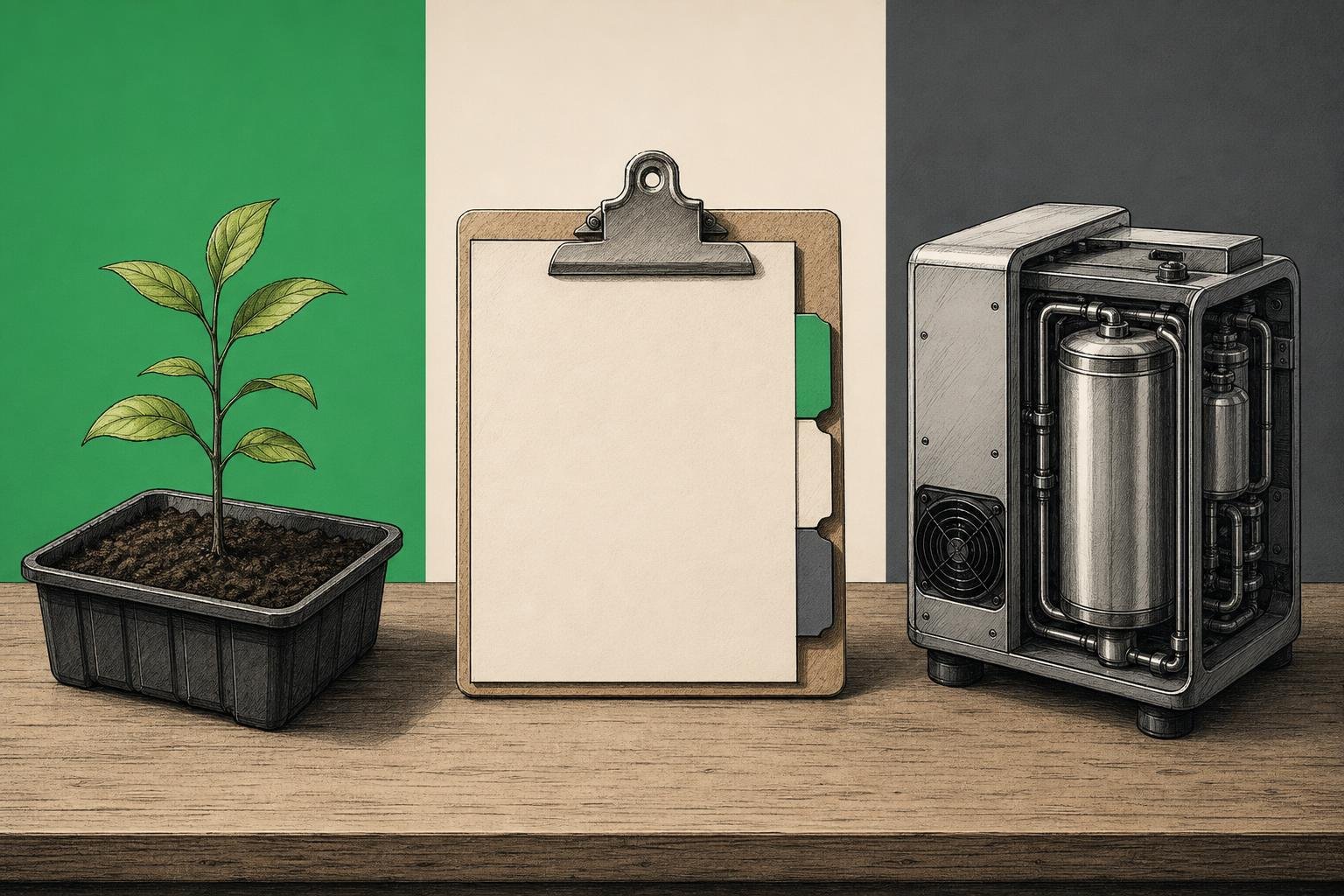
It can be tempting to compare offset projects as though one can simply replace another. In practice, that is rarely the case. Forestry and technology-based projects may both play a role in a corporate climate strategy, but they should not be treated as interchangeable. Each carries different timing, permanence, and verification considerations.
That is why a thoughtful comparison is so important. When we compare project types carefully, we can see which one is better suited to the specific need at hand. A project that makes sense for one claim may be a poor fit for another. Clear distinctions help avoid oversimplification and make climate decisions more credible.
Ask one question before buying
Before buying, we recommend asking one simple question: what risk is this offset meant to address? When that answer is clear, the project choice becomes easier to defend. It also becomes easier to explain to stakeholders, auditors, and internal teams who want to understand why one offset was selected over another.
That is the kind of comparison we help teams make at EasyOffset. We support organizations that want to choose offsets with more clarity, more confidence, and a stronger connection to the claim they need to support.
For teams working on climate action decisions, this approach creates a better foundation for responsible purchasing. It keeps the focus on fit, not just familiarity. And it helps ensure that offset selection is aligned with the purpose behind the claim.
If your organization is evaluating offsets, start with the question that matters most: what is this offset meant to address? The answer can make the difference between a generic purchase and a defensible climate decision. For more on how we approach this comparison, visit our website.